Category Archives: Interview Prep

How to Create an Epic Interview

Interviews are all about being one step ahead of the next candidate. I get asked sometimes how a person can make a strong positive impression on his or her interview panel. I think the best place to start is to pretend you’re a movie star. If this was a movie, what would make your interview EPIC?

223470_10150168295388950_1398514_n

Here are a few successful strategies.

  1. Bring a portfolio. Very few do it. Pictures make your accomplishments feel more real.
  2. Send a follow up thank you. Probably one in five send an email. About one in twenty send a handwritten letter. Be awesome. Do this.
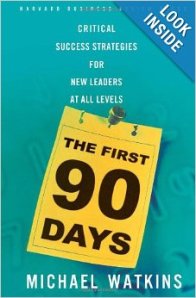
  3. Bring a 90 day plan. Very few people actually go into an interview thinking about what they’re going to do in the first 90 days. Do your homework and find out what the job really requires. A well thought out and realistic plan helps an interview panel have more confidence in your future with their organization.
  4. If they give homework prior to the interview, go above and beyond. I once was asked to analyze a web page and present recommendations for improvement during the interview. In addition to that, I also conducted some usability testing, created a prototype page, got it approved, and published it. Interviewers like to see bold actions.
  5. If they ask for anything in the interview, report back as quickly as possible and exceed their expectations. I was recently asked for contact information for someone in my network. Not only did I get it back to the interviewer that same day, but I also reached out to two other people, got their approval, and shared their contact info also.
  6. If they comment that you’re lacking in something, walk out of the interview and do something amazing to prove them wrong. A friend of mine was told in an interview that he didn’t meet the education requirements for the job. He went home that night, applied for his next degree and sent an email back to the interviewers letting them know of his work.

Now, these strategies won’t always get you the job, but they will create a lasting positive impression with your interviewers. Don’t be discouraged I they don’t pick you. You may have lost the battle, but you’re going to win the war. This will likely open future opportunities for you to participate in new projects that will prepare you for your next promotion.

The person who shows the most passion, initiative, experience, and desire gets the job. If you would like more ideas about how to wow your interview panel, let’s get together.
A Few Words About Telling an Interviewer You Want a More Creative Job

You have to earn it.

Don’t get me wrong. I believe that each one of us is born with the desire to be creative. It is part of our divine inheritance from a Heavenly Father who created the universe. But the vast majority of all work done in any business is routine production. The most profitable businesses are those that find their niche, focus on a few core products, and keep producing and selling them day after day after day. If everyone was 100% creative all day long, there wouldn’t be any consistency in the product lines.

creativity

What businesses (and by proxy, hiring managers) are looking for and are hiring for are people who can consistently contribute incremental innovation to the organization, not necessarily unbounded creativity. So it irks me in an interview when a candidate is describing their previous job and they tell me that their previous job wasn’t creative enough. What this really tells me is that they weren’t creative enough to find ways to express their creativity toward the goals of the organization. The reward for consistent incremental innovation toward the company’s established goals will usually be rewarded with increased responsibility and increased freedom to lead more and more creative projects. I know this principle is true because I am living it every day.

Now there are some exceptions. If you are interviewing for a senior level creative director position, then yes, your interviewer will want to hear about how creative you are. But, remember that you didn’t get there by jumping straight to the top of the org chart. You likely had to start at the bottom just like everyone else. You probably spent hours and hours as a graphic designer resizing and cropping photos. You did a really good job of it, and over time you were rewarded with more challenging creative projects. You worked your way up and now your resume and your portfolio demonstrate that growth and the high level of trust that your previous employers had in you. Like I said before, you have to earn the right to be creative.

I can help you brainstorm some ways to start adding incremental innovation to your current or future job. If you’re ready to take that step, let’s get together and talk.

Go In With a 90 Day Plan

amazon

Hiring a new employee is painful. Hiring managers are already typically in a lot of pain from losing their previous employee. Production is halted and the manager is worried about how long it will take before he or she can get you up to speed so they can go back to work.

Showing them an informed 90 day plan is your golden key. This will ease their anxiety about how long it will take to grain you before you are self sufficient. How do you get this key? Networking. Go to the former employee, a current employee in a similar role, or one of he manager’s peers. They might be able to give you an idea of what to put on your plan.

Five things to watch out for:

  1. An uninformed 90 day plan will hurt you more than help you. When in doubt, leave it out.
  2. Keep it simple. Most offices are in a constant state of change. A very rigid plan will likely be shot to pieces during the couple months.
  3. Include some meat. Fluffy plans yield fluffy results. Increase teamwork is fluffy. Conduct three innovative object lessons demonstrating collaboration best practices is not.
  4. Make yourself accountable. Include key performance indicators in your plan. Putting up some concrete numbers will allow your hiring manager to track your performance and then hopefully reward you when you accomplish them.
  5. Ask for their advice. If you feel like your plan has hit the mark with your interview panel, feel free to ask a couple questions about how it could be improved. Consider asking what a “wildly successful project” would look like for this role.

Want some additional ideas for your 90 day plan? Let’s get together and chat.

The Promotion S Curve

It’s possible to climb the ladder faster than you think. For most entry level jobs, I believe that you should only be in that role between 1-2 years. If you stay shorter than 1 year, you may appear uncommitted. Stay longer than two years and you’re likely to get bored and your productivity will decrease.

There are five primary stages to the promotion s curve. They are:

  1. Training
  2. Building
  3. Growth
  4. Mastery
  5. Stagnation

The best way to get promoted is to always jump to the new job before you reach the stagnation phase. You’re chances of getting promoted are highest during the growth and mastery phases. Promotions become less and less likely the longer you stay in the stagnation phase.

Picture an S curve. When you start in a new job, you start at the bottom left on a nearly horizontal line. For the first couple months you will struggle just to wrap your head around what you need to be doing. You’ll have a mountain of names, projects, and processes to learn. After a few months though it will start to click and you’ll find yourself being able to start adding real value to the organization.

As your learning curve starts to move more towards vertical, life gets exciting. During the growth phase, you’ll be of most worth to your team and you’ll learn the most. Because your previous job is still fresh in your mind, you’ll be able to make new connections and come up with innovative new solutions. Your excitement will be contagious as you feel yourself developing each day.

The excitement phase can last anywhere from 12-18 months depending on the level of complexity and variety in your job. At some point you’ll enter the mastery stage. You’ll notice that people will start coming to you first when they have a question. You might also perhaps find yourself in a team lead role.

Your chances of promotion will be highest during the mastery phase. If you do it right, you’ll find ways to delegate the more repetitive aspects of your job to others while you focus on more complex problems. This is good for you as well as your business. It is at this phase when you want to be actively looking for new opportunities and marketing your WSPs to leadership.

If you wait too long, the organizational politics, limitations of resources, and the repetitiveness of the job will start to get to you. As soon as this happens your productivity will start to drop as you become increasingly more jaded and bored. If this happens you will become a burden to your team. Management will also start to notice. If this happens, you’ll become less and less desirable as a candidate for a promotion.

Also the longer you stay in a job, the more that particular position becomes part of your identity. It will be harder to leave because you’ll get comfortable. The organization also won’t want you to leave because you’ll have a mountain of organizational knowledge in your head that they won’t want to lose.

Is it impossible to move after you hit the stagnation phase? No, but it just becomes increasingly difficult.

What stage are you in? What stage would you like to be in? If you’re ready to take the next step in your career, let’s get in touch and start making a plan to help you achieve your next promotion.

Wildly Successful Projects = Promotions

For most jobs these days you are probably competing with anywhere from 20-100+ other candidates. Even if you’re only competing against five other people, you still need to find a way to stand out from the crowd.

The best way to do this is demonstrating to your interviewer examples of your wildly successful projects. The term “wildly successful project” (WSP) comes from the book Paid to Think. Essentially widely successful projects are those that your boss’s boss knows about. If it didn’t get on his radar, it means it probably wasn’t important enough to get passed up the chain.

This is my favorite wildly successful project… 🙂
315551_10150832967105321_188416458_n

Completing a wildly successful project is a game changing event for both you and your organization. It goes way beyond the responsibilities of your day-to-day work. If you’re looking for a promotion, the best way to do this is to get as many WSPs under your belt, on your résumé, and in your portfolio as possible.

Knocking out consecutive WSPs is evidence that you are qualified to solve problems that are bigger than those detailed in your current job description. If you’re showing that you’re already solving your boss’s big problems it makes it a lot easier for them to officially change your job title.

Let’s get together and talk about what your next WSP could be, how to execute it, and how to best represent it in an interview.

Five Things an Interview Panel Won’t Tell You

Over the past few years I have conducted hundreds of interviews. This includes face-to-face, phone, and even skype. Being on the interviewing side of the table gives you a whole new awareness of what interviewers are expecting to hear from an applicant. Here are a few things I’ve learned.

dilbert-interview

Here are five things an interviewer typically won’t tell you:

  1. There usually isn’t much of a plan going into the interview. Interviewers are typically managers who have lots of meetings. They are often coming to your interview from another meeting. Their head isn’t in the game, and they’re likely not too prepared. What this means for you is that they are going to throw out a bunch of random questions. By quickly presenting your portfolio at the beginning your bring focus to the interview and control the conversation.
  2. Please keep your answers short. Most candidates are nervous to some degree. Being nervous usually causes them to ramble. Interviewers get bored easy, so rambling doesn’t help you. As a general rule, keep your answers to 60 seconds or less unless otherwise indicated. If they want to know more they can always ask a follow up question.
  3. Tell me a story. Please don’t just tell me that you have a dynamic personality or that you’re good at working in teams. Everybody says that. Prove it to me by telling me a short and engaging story. Get to the meat.
  4. Don’t ask what the day in the life of position x looks like. Again, everybody asks that. You look pretty average when you look that question. Instead ask something more focused that shows that you’ve already researched the company and the job.
  5. Don’t ask when they’re going to make a decision. The hiring process typically requires many interviews and approvals from management. Regardless of what an interviewer tells you, it probably won’t be accurate. Asking only sets you up for disappointment and makes them feel guilty. Instead, just tell them that you’re very interested in the opportunity and that you’ll wait to hear back from them.

There are lots of other nuances to the interviewing process. Let’s get together and talk about what other things we can do to help you get ready for your next big interview.