
Whenever I first mention the word portfolio, most people quickly think of a photography or art portfolio. It’s a similar concept, but different style. The purpose of the portfolio is to quickly show your interview panel examples of projects you’ve done throughout your career. These pictures become evidence of your skills and qualifications. They carry a lot more weight than bullet points on your resume.

5 Tips for Your Portfolio
- Portfolios, just like resumes, need to be targeted to the specific position. Each job posting will include hints about what interviewers are looking for. Create a base portfolio and then add and subtract as appropriate.
- Use as few words as possible. Your portfolio should not make sense without your commentary. This allows you to be the focus of the interview rather than your portfolio.
- Show examples of your best work, but not all of your work. Each example should be awesome. Including a lot of average examples makes you appear like an average applicant.
- Keep it short. You should be able to present your whole portfolio in under five minutes. You need to give your interviewers enough time to be able to ask questions.
- Print multiple copies of the portfolio. It’s often awkward to try to pull out a computer and/or connect to a projector in an interview, especially if the interviewers are not expecting it. Printing copies also allows them to take your work with them after you leave.
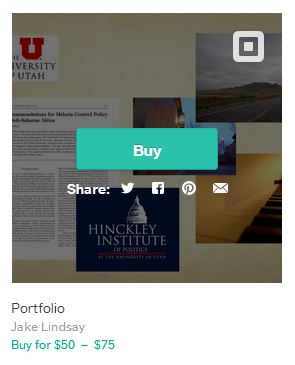 Bottom line: people are visual. Pictures make your achievements feel more concrete to a hiring manager than bullet points on your resume ever could. A portfolio sets you apart from the pack. If you’re interested in having me create a portfolio for you, let’s get in touch. You can give me a call or send me a text at 801-419-2013.
 Career Climber
Pingback: How to Create an Exceptional Interview | Career Climber
Pingback: Don’t Forget Your Sleeping Bag: 8 Things to Take to an Interview | Career Climber
Pingback: Don’t Forget Your Sleeping Bag: 9 Things to Take to an Interview | Career Climber